

LMG Lights Up the Washington Monument
Photo Credit: Courtney Reed
For LMG, being selected to projection map the Washington Monument on New Year’s Eve meant transforming one of the most recognizable structures in the world into a four-sided canvas visible across Washington, D.C.
Early research revealed that previous projections had only ever covered a single face of the monument. This project would require more.
“From the beginning, the idea was to projection map the Washington Monument from all four sides, which hasn’t been done before,” says Patrick Verhey of LMG Systems Innovation. “So we were the first ones.”
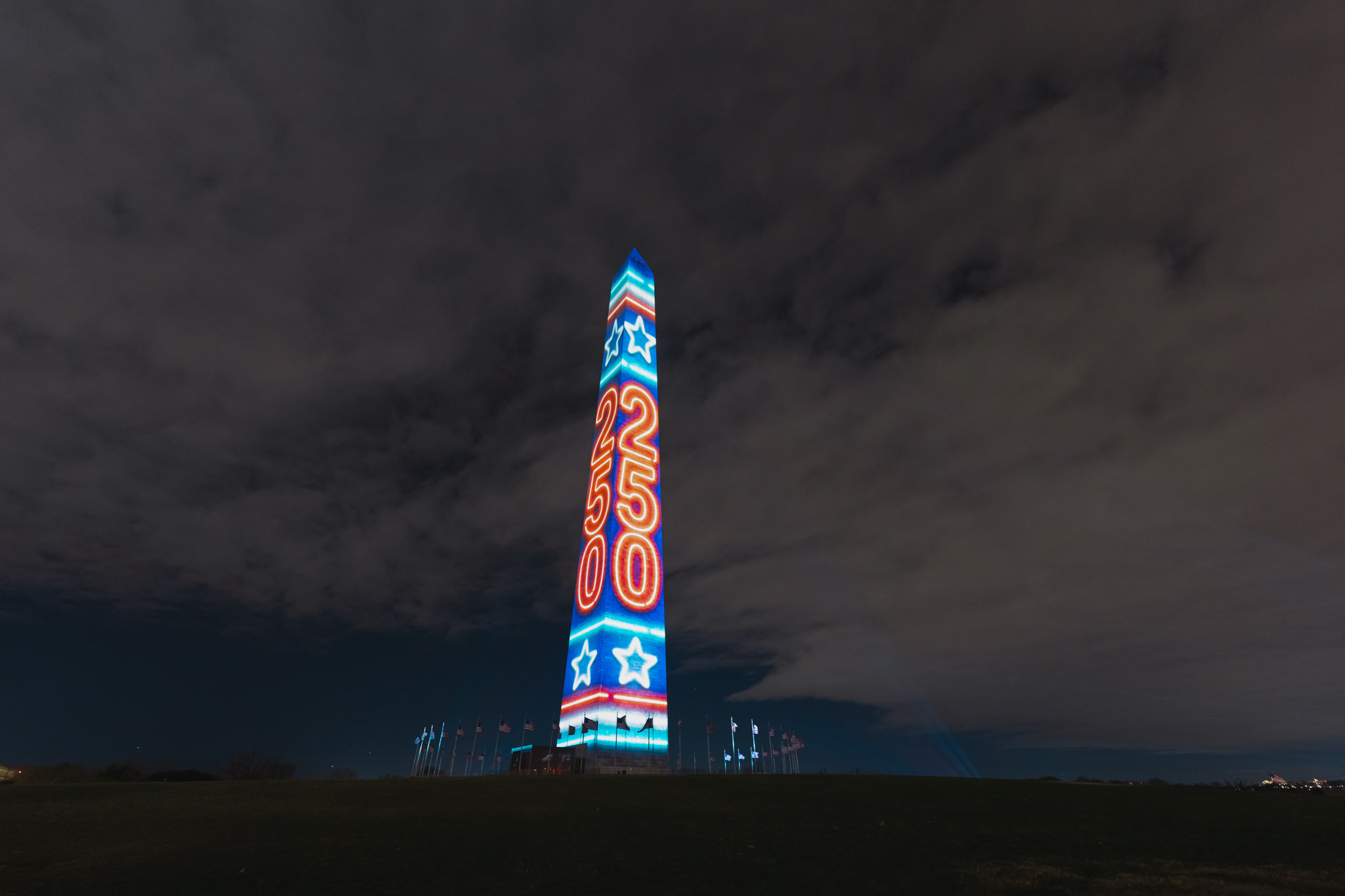
Photo Credit: Freedom 250
A First-of-Its-Kind Canvas
Standing more than 550 feet tall and visible from nearly anywhere in the city, the monument leaves no room for error. “Everything we do there will be visible across the entire city,” Patrick says. “There was no hiding.”
The monument’s geometry added another layer of complexity. Distances shift from base to peak, and measurements vary depending on orientation.
“I’ve never done so much math in my life for a particular project,” says Jayson Wise, Director of Video Systems at LMG. “We had to know the height, the angles, the distances. One little number being off changes your projection angle, your lensing, everything.”
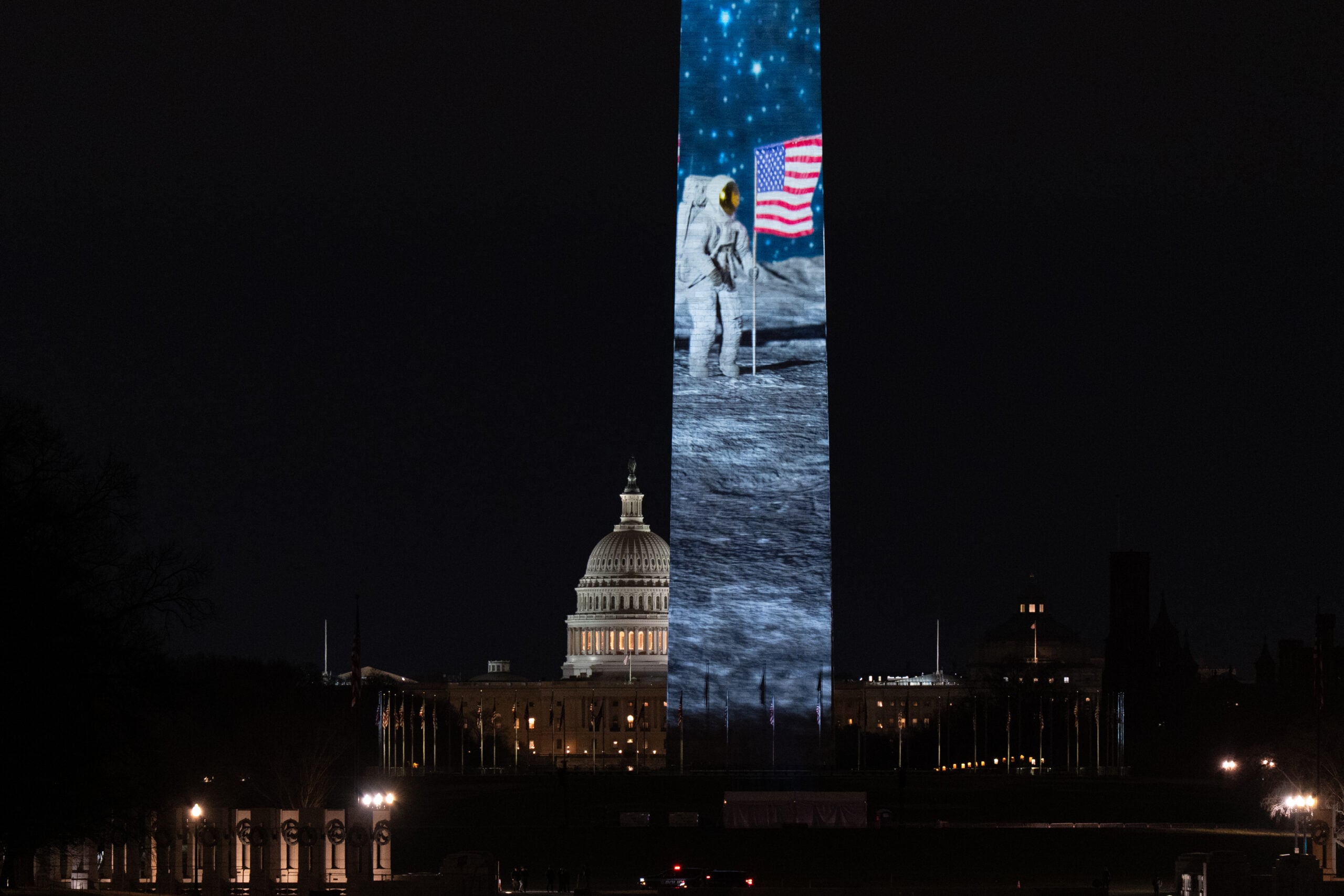
Photo Credit: Courtney Reed
Engineering at Monument Scale
Extensive research and a long site survey informed projector placement, lens selection, and coverage from the base of the monument to the top.
In total, LMG deployed 40 Barco UDX-4K40 projectors, with primary and backup units on every side to ensure uninterrupted coverage. The projection system was driven by a Ross Vertex media server ecosystem, deployed across eight decentralized playout computers and control locations surrounding the monument.
“The projectors only get roughly into position. The precise alignment comes out of the media server system. That’s where everything lines up and becomes one image.”
At showtime, the entire system came together in a single, synchronized moment.
“At the end of the day, it was literally one button. Press play, and everything happened.”
Execution in the Elements
Severe weather conditions in D.C. tested both equipment and endurance.
“We probably had gusts up to 45 miles an hour, temperatures around 32 degrees, and a wind chill around 14. Pretty brutal conditions,” Jayson recalls. “I really have to give it to the crew because they stuck with it.”
What carried the project through was the experience and resilience of the team on the ground, including head projectionist Phil Licari, who celebrated his 20th anniversary with LMG during the project.
“Everybody who was on site is capable of what they’re doing. Everybody knew what to do, was prepared, and was working tirelessly to get this all together. It was a really good team effort,” Patrick recalls.
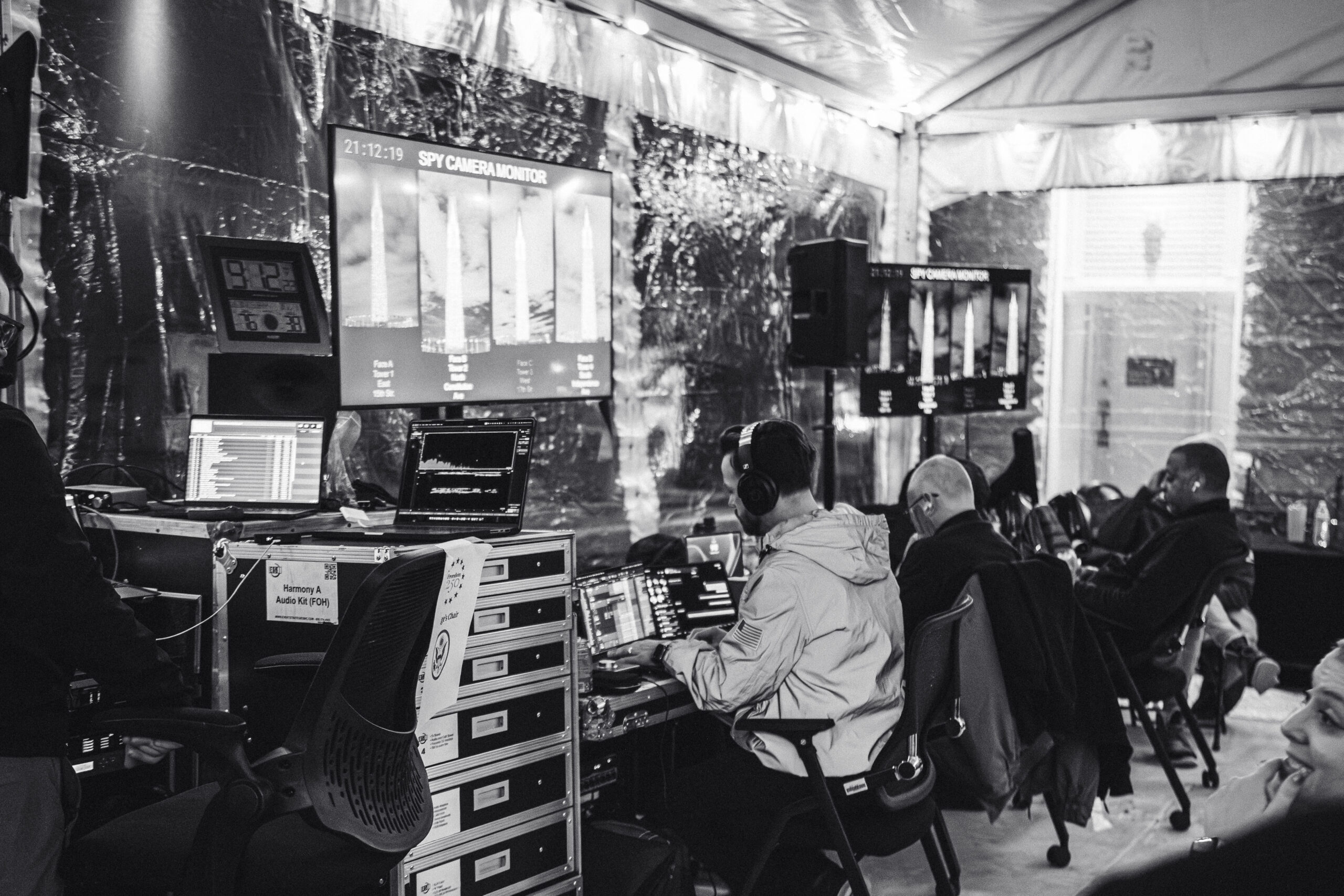
Photo Credit: Jerald Kerr
A Moment That Traveled Far Beyond D.C.
Once the monument lit up, attention followed. What started on the National Mall quickly spread across broadcast and social media.
“It only took two hours until the first Reddit post exploded. You just can’t hide something like this,” Patrick says.
For the team, the impact was both professional and deeply personal.
“To be asked to project onto the Washington Monument is a once-in-a-lifetime opportunity. The fact that we were chosen to do that, I feel grateful,” says Jayson.
For some, the reach extended far beyond the United States.
“Even my parents saw it on television in Germany on New Year’s Eve,” says Patrick. “It was probably the most viewed shows I ever did in my life… I’m very grateful and thankful that I was allowed to do this and that people trusted me on doing it.”
What Could Be Next
By successfully projection mapping all four sides of the Washington Monument, LMG delivered a first-of-its-kind moment on a national stage, combining technical precision, creative collaboration, and a team willing to push through extreme conditions.
“We’ve done this once, now we’ve got a recipe.”
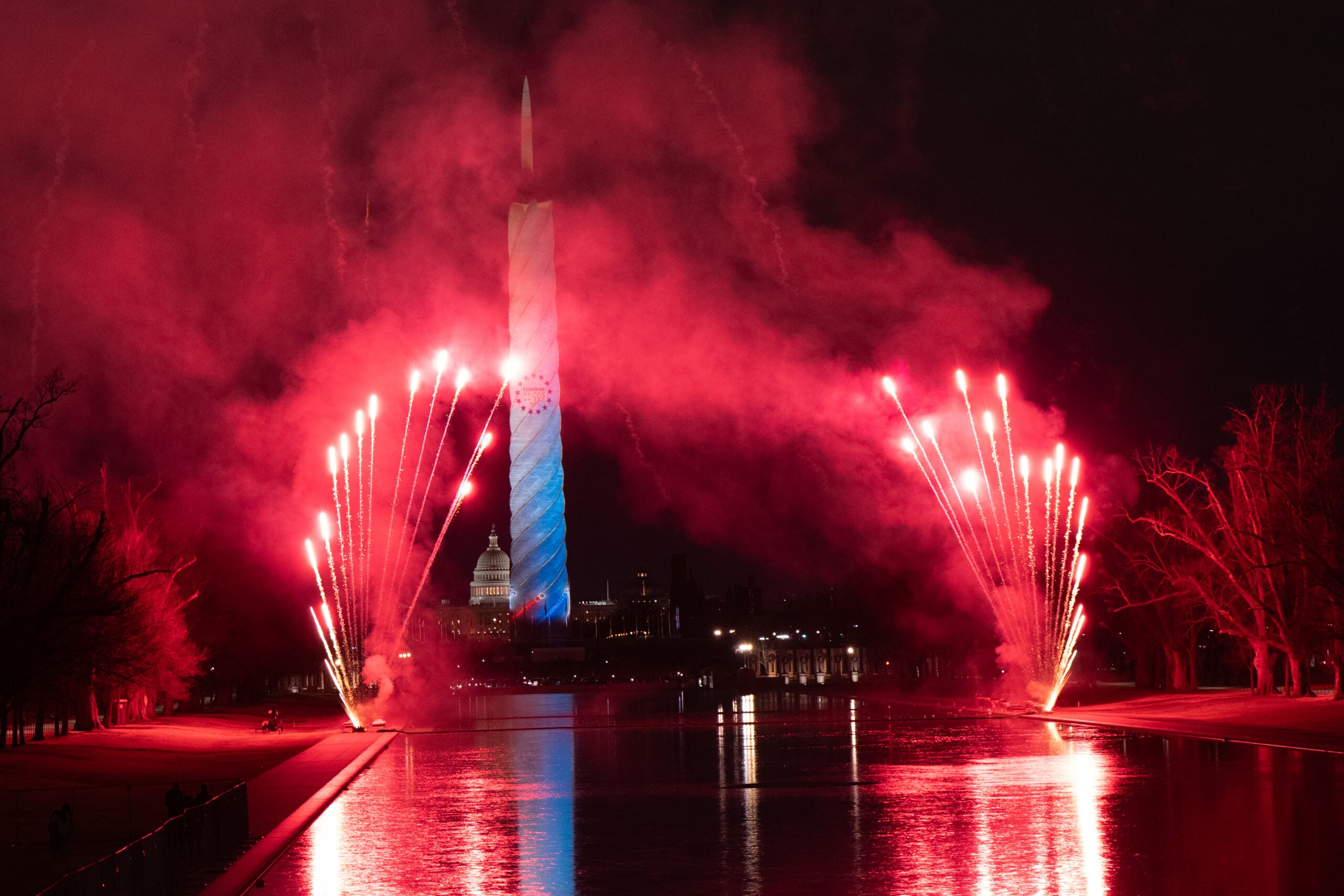
Photo Credit: Freedom 250
RECENT POSTS
How Technology Shapes Modern Storytelling
Les Goldberg chats with Rick Borja from Go West Creative, Chris Drury from Drury Design Dynamic and Stephen Dahlem from Corporate Magic about how important technology is to storytelling in his most recent podcast.
Creating a Safe Environment for Live Events
It is all about event safety for the audience. Les Goldberg talks with Timothy Wimbley from Events TNT, Mark Herrera from Global Awareness Professionals and Dominic Housiaux from Risky Business Resources about creating a safe environment for live events.
How Meeting Planners Win at Hotel Negotiations
Les Goldberg talks with John Cruz from MetLife, Adriance Cesa from Huntington Bank, Larry Epstein from The Launch Group and Mandy Hazlett from National Precast Concrete Association about the elements of negotiating a successful contract with the venue in his most recent podcast
What Keeps Us Hooked on Live Events
Les Goldberg talk with Stage Manager- Miles Kapper, Producer- Tony Castrigno and Executive VP Creative Services at Media Loft- Daniel Walls about what it is about the live event business that keeps them excited and wanting to keep them working in the live events industry.
Working With In-House AV Teams
Have you found fair value when working with in-house providers—both exclusive and nonexclusive? In this episode of The Road Ahead, Les Goldberg talks with Karim Kassab, Aaron Levinthal, and Dan Wilcox about their real-world experiences navigating venue restrictions, fees, and team dynamics. They explore what works, what doesn’t, and how to get the best results when partnering with in-house teams.